Hebei Zhongda Electric Power Equipment Co., LTD.,Contact Now Get 20-30% Off




Drop type lightning arrester
Release time:
2025-11-04
A Drop Type Lightning Arrester (also known as a Drop-Out Surge Arrester) is designed to protect electrical power systems from transient overvoltages caused by lightning strikes or switching operations.

In modern power distribution and industrial facilities, lightning and switching surges remain major threats to electrical equipment reliability. The Drop Type Lightning Arrester offers a compact, durable, and high-performance solution — engineered to ensure continuous protection, stability, and compliance with international standards such as IEC 60099-4 and IEEE C62.11.
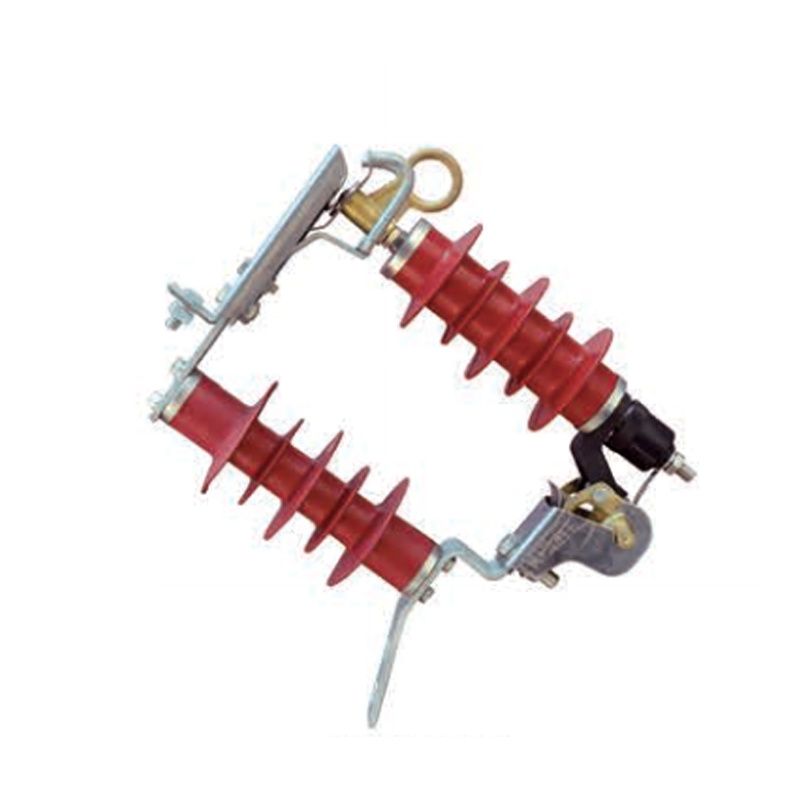
A Drop Type Lightning Arrester (also known as a Drop-Out Surge Arrester) is designed to protect electrical power systems from transient overvoltages caused by lightning strikes or switching operations.
It combines a zinc oxide (ZnO) varistor core with an intelligent drop-out mechanism — when the arrester endures an abnormal surge current or insulation failure, it automatically drops out of service, visibly indicating isolation and ensuring system safety.
🌐 Key Features & Advantages
✅ 1. High Surge Absorption Capability
Utilizes advanced ZnO varistor technology to achieve superior non-linear voltage-current characteristics.
Withstands surge currents up to 65 kA (as per IEC test level), ensuring exceptional reliability during lightning or switching surges.
🧩 2. Visible Drop-Out Design
The unique drop type mechanism allows visual fault indication — a clear sign for maintenance teams, improving response time and system uptime.
Ideal for outdoor pole-mounted applications, reducing inspection complexity.
🛡️ 3. Enhanced Safety & Durability
The arrester body is made from silicone rubber housing, offering excellent hydrophobicity, UV resistance, and pollution resistance.
Complies with ANSI C29.13 and IEC 60099-4 standards for mechanical and thermal stability.
⚙️ 4. Easy Installation & Maintenance
Designed with standard fitting dimensions for quick installation in overhead distribution lines.
The drop-out function simplifies post-fault maintenance without interrupting other circuits.
Keyword:
Related News
Features and advantages of glass insulators
Light weight and high strength: Glass insulators have better light weight and high strength characteristics than traditional insulators, which makes it easy to install and maintain.
2025-08-05
Definition and use of glass insulators
Glass insulator: The device used to support and insulate the wire is called an insulator. The insulator device is made of glass, so it is called a glass insulator.
2025-08-05
An In-Depth Look at the Manufacturing Process of Pin Type Porcelain Insulators
An In-Depth Look at the Manufacturing Process of Pin Type Porcelain Insulators Table of Contents 1. Introduction to Pin Type Porcelain Insulators 2. Raw Materials Used in Manufacturing 3. Step-by-Step Manufacturing Process 3.1 Mixing and Blending Ingredients 3.2 Forming the Insulator Shapes 3.3 Drying the Formed Insulators
2026-09-14
Understanding Tempered Glass Insulators: A Key Component in Electrical Insulation
Tempered glass insulators are essential components in the electrical engineering sector, particularly in applications that require reliable insulation and durability. These insulators are made from specially treated glass that enhances their strength and thermal resistance, making them suitable for high-voltage environments. The process of tempering involves heating the glass to high temperatures
2026-09-11
Innovations in Drop Type Fuse Technology for Modern Power Lines
Innovations in Drop Type Fuse Technology for Modern Power Lines Introduction to Drop Type Fuse Technology In the realm of electrical engineering, **drop type fuses** have become integral components, especially for modern power lines. These devices serve the crucial purpose of protecting electrical circuits from overloads and short circuits, ensuring the safety and reliability of power distribution
2026-09-08